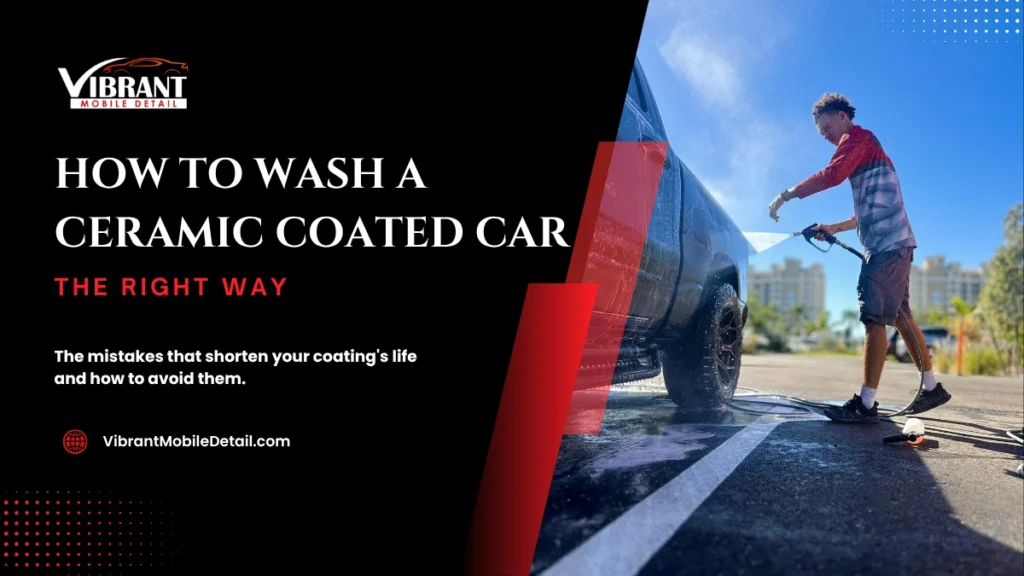
You spent $1,000 or more on a ceramic coating. The car looks incredible. Water beads roll off like mercury. And then, six months later, the hydrophobic effect is fading, water spots are not wiping off the way they used to, and you cannot figure out why.
In almost every case, it comes down to one thing: how the car is being washed. Knowing how to wash a ceramic coated car the right way is what protects the investment. The wrong wash routine can shorten a coating’s effective life by years, and in some cases, void the warranty entirely.
This guide covers what to do, what to avoid, the best soap for ceramic coated cars, why automatic car washes are a problem, and the specific maintenance routine that gets the most out of a car Crystal Serum Ultra coating in Florida.
Quick Answer: What Is the Right Way to Wash a Ceramic Coated Car?
Hand wash only, with pH-neutral ceramic-safe shampoo, using clean microfiber tools, working top to bottom, drying with a clean microfiber towel or filtered air, every 1 to 2 weeks. Avoid automatic car washes with brushes, dish soap, harsh detergents, dirty tools, and air-drying in the sun.
That is the short version. The reasons for each point matter, and how it affects the coating, is where the real understanding starts.
Why Ceramic Coatings Need a Different Wash Routine
A ceramic coating is not paint. It is a hard, glass-like nano-layer chemically bonded to the clear coat. It has its own surface chemistry, its own performance characteristics, and its own vulnerabilities. Treating it like regular paint with a quick rinse at a tunnel wash is the fastest way to damage it.
Three properties of ceramic coatings determine the right wash approach:
Hydrophobicity: Water beads and sheets off because the coating’s surface tension is extremely high. Anything that disrupts that surface (residue from harsh soaps, mineral deposits from hard water, swirl marks from abrasive towels) may reduce or kill the beading effect.
Surface hardness: Coatings like Crystal Serum Ultra carry a 10H hardness rating, which means they resist scratching far better than the bare clear coat. But they are not bulletproof. Abrasive wash methods will scratch the coating layer and create swirl marks visible in direct sunlight.
Sacrificial top layer: Most premium coatings have a sacrificial outer layer that takes the brunt of environmental exposure first. Aggressive chemicals strip this layer faster than normal use does, accelerating the need for a professional maintenance booster.
Wash the coating gently and consistently and it performs the way it was designed to for years. Wash it the wrong way and you are essentially paying to remove your own protection.
Can You Use Regular Soap on Ceramic Coating?
No. Regular dish soap, household degreasers, and many off-the-shelf car wash soaps are designed to strip oils and waxes. This is not ideal for the hydrophobic layer of your ceramic coating. Within a few washes, the water beading slows down. Within a few months, it can make a significant impact on horizontal surfaces.
The best soap for a ceramic coated car has three properties: pH neutral (around 7), free of waxes or sealants that would mask the coating’s natural surface, and formulated to lubricate without harsh surfactants. Brands like Gtechniq W2 Bac, Adam’s Ceramic Wash & Coat, P&S Pearl Auto Shampoo, and Chemical Guys HydroSuds are commonly used by professional detailers for coated vehicles.
If a soap label says it strips wax, builds shine, or contains gloss enhancers, skip it. Those additives interfere with the coating chemistry. You want a clean, simple, neutral wash that lifts dirt and rinses clean without leaving anything behind.
The Standard Hand Wash Method for Ceramic Coated Cars
There is an industry-standard approach taught across professional detailing called the two-bucket wash method. It is the baseline DIY technique that has held up across decades because the physics behind it are sound: separate dirty rinse water from clean soapy water and you never drag yesterday’s grit back onto the paint.
Here is how to do it correctly when washing your own ceramic coated car at home in Florida.
Step 1: Park in the Shade and Pre-Rinse
Never wash a hot vehicle in direct sun. Water evaporates too fast, soap dries on the panel, and mineral spots etch into the coating’s surface. Park in shade or wait for an overcast morning. Rinse the entire vehicle thoroughly with a hose or pressure washer (under 1,500 PSI) before any contact. The goal of the pre-rinse is to flush off as much loose dirt as possible before a mitt touches the paint.
Step 2: Foam the Surface
If you have a foam cannon or foam gun, layer the car in pH-neutral shampoo foam and let it dwell for 3 to 5 minutes. Foam pulls dirt off the surface chemically before contact, which dramatically reduces the chance of micro-scratching during the actual wash.
Step 3: Set Up Two Buckets
Use one bucket with pH-neutral ceramic-safe shampoo and clean water. Use a second bucket with plain water only. Drop a grit guard into the bottom of each one. The first bucket is your wash water, the second is for rinsing your mitt between every panel. This separation is the entire reason the method works. Dipping a dirty mitt back into clean soap water turns that soap water into sandpaper.
Step 4: Wash One Panel at a Time, Top to Bottom
Start at the roof. Use a clean microfiber wash mitt loaded with soapy water, and wipe in straight lines (never circles, which create swirl marks). Wash a single panel, rinse the mitt thoroughly in the plain-water bucket, agitate against the grit guard to release trapped dirt, then dunk back into the soap bucket and move to the next panel. Work your way down the vehicle: roof, hood, trunk, glass, upper doors, lower doors, bumpers, rocker panels, last.
The lower 12 inches of the car are always the dirtiest. Save them for last and consider using a separate dedicated mitt for those panels.
Step 5: Rinse Thoroughly
Rinse the entire car from the top down with a flowing stream of water. Sheet rinsing (removing the nozzle and letting water flow over the surface) helps water roll off coated panels without leaving spots behind.
Step 6: Dry the Right Way
This is where a lot of damage happens. Air drying in the sun is one of the worst things you can do to a ceramic coating, because the water carries minerals that bake onto the surface and create water spots that can etch in permanently.
Dry with a clean, plush microfiber drying towel using a pat-and-pull motion rather than dragging. If you have access to one, a filtered air blower is the safest option of all because it removes water without any contact. Pay extra attention to panel gaps, side mirror seams, and door handles where water hides and drips out later.
Step 7: Light Quick Detailer Wipe (Optional)
After drying, a quick spray of ceramic-safe quick detailer on each panel followed by a clean microfiber wipe restores the slick surface and pulls off any residual water marks. This step takes 10 minutes and noticeably refreshes the coating’s hydrophobic feel.
Mistakes That Damage or Void Your Ceramic Coating
Some mistakes cause gradual degradation. Others cause immediate damage. Here are the ones that have the biggest impact on coating performance and warranty status.
Automatic Car Washes With Brushes
Drive-through car washes that use spinning brushes or fabric strips are the single most damaging thing you can do to a ceramic coated car. The brushes drag the same trapped dirt across thousands of vehicles per week, and that dirt acts like sandpaper on your coating’s surface. Within a handful of brushed washes, swirl marks become visible. Within a few months, the coating’s hydrophobic top layer is significantly compromised.
Touchless automatic washes are a different story. They use only high-pressure water and chemicals with no physical contact. They are not as thorough as a hand wash, but they will not abrasively damage the coating. If you absolutely have to use an automatic wash, touchless only.
Dish Soap or Harsh Detergents
Dish soap is designed to strip grease and oils. The hydrophobic surface of your coating is, chemically speaking, an oil-like surface to a degreaser. Wash with dish soap a few times and you can measurably reduce the coating’s water beading effect. Many manufacturer warranties, including Gtechniq’s, specify use of approved pH-neutral shampoos. Using dish soap can be considered improper maintenance and put the warranty at risk.
Skipping the Pre-Rinse
Going straight to a soapy mitt on a dusty, gritty panel grinds that grit into the coating. Every wash without a pre-rinse adds to the micro-scratch load on the surface. Pre-rinse is not optional. It is the single most important step for preserving coating clarity over time.
Dirty or Reused Towels
Microfiber towels and mitts trap dirt deep in their fibers. Reusing a towel from the previous wash, or dropping a mitt on the ground and continuing to use it, drags everything that towel has touched across your coating. Microfiber tools should be washed separately from regular laundry, with no fabric softener (which clogs the fibers), and replaced when they show wear.
Washing in Direct Sun
Florida sun on a dark hood pushes surface temperatures past 150 degrees Fahrenheit. Water flashes off, soap dries on the surface, mineral spots etch in, and the wash becomes counterproductive. Always wash in shade or in cooler morning hours.
Cheap Generic Wash Mitts and Sponges
Yellow cellulose sponges and stiff-fiber mitts trap dirt and drag it across the paint. Use only high-quality microfiber wash mitts or chenille mitts that release captured dirt easily when agitated in the rinse bucket.
Spray Waxes That Contain Carnauba or Petroleum-Based Sealants
Adding a spray wax over a ceramic coating is fine if it is a coating-compatible quick detailer or ceramic booster. But thick traditional carnauba spray waxes and petroleum-based sealants can mask the coating’s natural surface chemistry, dulling the hydrophobic effect and making maintenance harder. Use only products labeled ceramic-safe.
The Ceramic Booster: The Secret to a Multi-Year Coating
Even with perfect washing, the sacrificial top layer of any ceramic coating slowly wears down. A ceramic booster spray is a thin SiO2-based product applied every 3 to 6 months that refreshes the surface chemistry, restores hydrophobicity, and extends the effective life of the base coating significantly.
Boosters are typically applied to a clean, dry car panel by panel. Spray two to three mists onto a microfiber applicator, spread evenly, wait one minute, then buff with a clean microfiber towel. The whole process takes 30 to 45 minutes and adds visible depth back to the gloss.
For owners who want the easiest path to maximum coating life, scheduling a professional maintenance booster as part of Vibrant Mobile Detail’s ceramic maintenance package is the most reliable option. The team applies the booster correctly, decontaminates the surface beforehand, and inspects the coating’s overall condition while they are there.
How Often Should You Wash a Ceramic Coated Car in Florida?
For a daily driver in Southwest Florida, every 7 to 14 days is the right rhythm. Florida-specific factors push toward the shorter end of that range:
Coastal vehicles within 10 miles of the Gulf accumulate measurable salt deposits every day from onshore breezes. Salt that sits on the coating turns corrosive in humid air, so it needs to come off regularly.
During lovebug season (late April through May, and late August through September), weekly washing is essential. Lovebug acid can etch the sacrificial top layer of even premium coatings if left on for 24 to 48 hours in direct heat.
Hard water from lawn sprinklers, common across Lee and Collier County, leaves mineral deposits that can become permanent water spots if not washed off promptly. Any time the vehicle gets hit with sprinkler overspray, rinse it the same day if possible.
After hurricane season storms, give the vehicle a full decontamination wash to clear the salt spray, airborne sand, and debris that storms bring inland.
Frequently Asked Questions
Can you use regular soap on ceramic coating?
No. Regular dish soap and household cleaners strip the hydrophobic layer of the coating and degrade its performance. Use only pH-neutral, ceramic-safe car shampoos. Many manufacturer warranties require approved soap to remain valid.
Does an automatic car wash damage ceramic coating?
Brushed automatic washes do, significantly. The brushes drag accumulated dirt from previous vehicles across your coating, creating swirl marks and degrading the surface. Touchless automatic washes, which use only water pressure and chemicals, do not cause that abrasive damage and are an acceptable option when hand washing is not possible.
Is the two-bucket wash method really necessary?
It is the standard DIY method taught across the industry because it works. The principle is simple: a separate rinse bucket prevents dirty water from contaminating your soap water. If you only use one bucket, every dip after the first one drags trapped grit back onto your paint. For a ceramic coated car, that abrasion shows up faster than on uncoated paint because you are scratching the coating itself.
What is the best soap for a ceramic coated car?
Any pH-neutral, ceramic-safe car shampoo. Gtechniq W2 Bac, Adam’s Ceramic Wash & Coat, P&S Pearl Auto Shampoo, and Chemical Guys HydroSuds are common choices among professional detailers. Avoid anything labeled as wax-stripping, gloss-enhancing, or containing additives that mask the coating’s surface.
How long should I wait to wash a freshly applied ceramic coating?
Most coatings, including Crystal Serum Ultra, need 7 days of no-contact cure time before the first wash. The coating is fully bonded after about 24 to 48 hours but reaches maximum hardness over the following week. Washing too early can soften or disturb the coating before it cures completely.
Do I still need to wax a ceramic coated car?
No, and you should not in most cases. The coating is the protection. Adding a wax layer on top blocks the coating’s natural surface chemistry and provides no real benefit. A ceramic-safe booster spray or quick detailer is the right product for occasional surface refreshment between professional maintenance visits.
How often should I get a professional ceramic maintenance visit?
Every 6 to 12 months for vehicles in Florida. The team decontaminates the surface, inspects the coating’s overall health, applies a professional booster, and addresses any micro-marring before it becomes visible damage. This is the schedule that hits the upper end of the 9-year warranty life on Crystal Serum Ultra.
Protect the Investment You Already Made
A ceramic coating is one of the best decisions you can make for a vehicle that lives in Florida’s climate. But the coating’s actual lifespan comes down almost entirely to how it is maintained after application. The owners who get 9 years out of a Crystal Serum Ultra coating do not have secret tricks. They wash gently, regularly, with the right products, and they book a professional maintenance visit twice a year.
If you want the full ceramic coating service for car done right from the start, or you have an existing coating that needs maintenance booster work, Vibrant Mobile Detail handles both. Schedule a maintenance detail and the team comes to you with everything needed to keep the coating performing at its peak.